

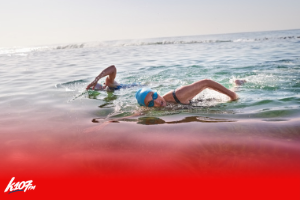
Thirteen of Fife’s 15 designated bathing waters will be classified as Good or Excellent in 2027 according to the Scottish Environment Protection Agency (SEPA), while Kinghorn (Harbour Beach) and Lower Largo have received Poor classifications.
Fife’s bathing waters stretch from Aberdour and Burntisland along the East Neuk to St Andrews. These beaches are valued by coastal communities and visitors, making the results important both where water quality is consistently high and where more needs to be done.
Scotland’s bathing water season runs from 1st June to 15th September every year, when SEPA carry out regular water quality monitoring at designated bathing waters. The annual classifications reflect both monitoring carried out during the 2026 bathing season and a longer-term picture of water quality across Scotland's beaches and inland bathing waters. Unlike individual water samples, which show conditions at a particular point in time, bathing water classifications are calculated using four years' of monitoring results. This helps SEPA understand changes in water quality over time and identify where further action is needed.
Fife bathing water classifications for 2027
• Aberdour (Silversands) - Excellent
• Aberdour Harbour (Black Sands) - Good
• Anstruther (Billow Ness) - Excellent
• Burntisland - Good
• Crail (Roome Bay) - Excellent
• Elie (Harbour) and Earlsferry - Excellent
• Elie (Ruby Bay) - Excellent
• Kinghorn (Harbour Beach) - Poor
• Kinghorn (Pettycur) - Good
• Kingsbarns - Excellent
• Kirkcaldy (Seafield) - Good
• Leven - Good
• Lower Largo - Poor
• St Andrews (East Sands) - Excellent
• St Andrews (West Sands) – Good
Action to address pollution at Kinghorn and Lower Largo
Two bathing waters have been classified as Poor: Kinghorn (Harbour Beach) and Lower Largo. SEPA recognise that these results will be disappointing for local communities and are continuing to work with regulated operators and partners to identify the most effective improvements alongside investigating the sources of pollution.
At Lower Largo, Scottish Water were required by SEPA to install improved wastewater treatment works during the 2026 bathing season, providing secondary treatment. Initial indications are very positive, and SEPA are continuing additional monitoring to assess whether the investment is delivering the expected benefits, and that water quality has improved to consistently meet bathing water standards.
Kinghorn (Harbour Beach) has received its fifth consecutive Poor classification. This means permanent advice against bathing will be issued and the location will cease to be a designated bathing water until water quality is improved.
Despite previous investigations and completed improvement measures, the sustained improvement required has not been achieved. SEPA are issuing a further regulatory notice requiring Scottish Water to continue investigations and improvement actions and water quality monitoring will continue as necessary.
The national picture
Across Scotland, 86 of the 90 bathing waters assessed following the 2026 bathing season meet the required standard. The national results are 44 Excellent, 30 Good, 12 Sufficient and four Poor.
Dr Ruth Stidson, Principal Scientist for Bathing Waters at SEPA, said:
“Most of Scotland’s bathing waters continue to meet the required standards, and that’s encouraging. But we know that for people who care about their local beach, the national picture isn’t the whole story.
“Where water quality isn’t good enough, people rightly want to understand why and what’s being done about it. Improving bathing water quality can be complex. Pollution doesn’t always come from one obvious source, and what works at one location won’t necessarily work somewhere else.
“That’s why our monitoring and scientific investigations are so important. They help us understand where pollution is coming from and ensure that evidence informs the action needed to make improvements.
“We’ve seen what sustained investment, effective regulation and partnership working can achieve, but we recognise that improvements don’t always happen as quickly as we’d like. Our ambition isn’t simply for bathing waters to meet the standard. We want to see more achieving Good and Excellent classifications, and we’re determined to keep working with our partners to deliver lasting improvements.”
Climate Action and Rural Affairs Secretary Gillian Martin said:
“Protecting our bathing waters is vital for our coastal communities and our monitoring gives people the reassurance that they can safely enjoy these special places. I am pleased to see a large proportion of our bathing waters continue to meet the highest classification for bathing water quality, which is a credit to the work being done by SEPA.
“I want all sites to achieve the bathing water standards and there is clearly more work to be done to achieve that. However, SEPA’s monitoring shows us where we need to amplify our efforts to achieve this; and we will continue to work with SEPA and Scottish Water to take appropriate actions to drive improvements in water quality.”
Helping people make informed choices
Heavy rainfall can wash pollution from land and drainage systems into rivers, lochs and coastal waters, temporarily affecting water quality even at locations classified Good or Excellent. SEPA advise people not to bathe during or for one to two days after heavy rainfall.
During the bathing season, SEPA provide monitoring results, forecasts at selected bathing waters and information about individual locations at https://bathingwaters.sepa.org.uk
 What would you like to see on Kirkcaldy’s Waterfront?
 First 'Cram The Van' in support of The Cottage Family Centre Christmas Appeal
 Fife libraries celebrate Reading Schools Week and Mobile Libraries Day
 Weather vane returns to Kirkcaldy Town House after restoration project
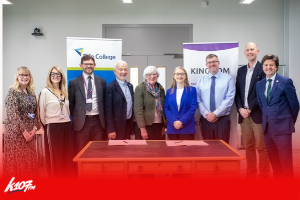 Fife College and Kingdom Housing Association announce five-year partnership to boost skills and career opportunities across Fife