

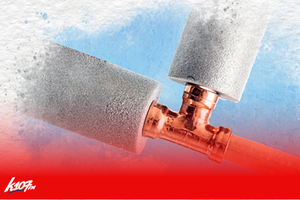
Householders and businesses are being asked by Scottish Water to check in the coming weeks to ensure their water pipes are protected from cold weather this winter and help minimise the risk of bursts and property damage
Property owners are being advised that preparing early for sub-zero temperatures could prevent problems such as burst pipes and flooding - and all the inconvenience and expense they can cause - and help reduce the amount of water lost through leakage.
When temperatures fall below zero, water in pipes can freeze, expand, and then contract if the temperature rises and this can cause them to crack or burst.
In some recent winters Scotland has experienced several very cold weeks, with pipes freezing, followed by quick thawing and this has caused a surge in the number of bursts across the country. This, in turn, has led to many incidents of flooding and damage to property, causing significant inconvenience and expense for householders and businesses.
The utility advises anyone with a home, holiday home or business premises to take action to Heat, Insulate and Protect their properties and pipes, whether the property is old or new.
Kevin Roy, Scottish Water’s Director of Water, said:
“It’s really sensible and prudent to prepare for the possibility of severe weather and the potential impact that has on property and by taking steps to Heat, Insulate and Protect properties and pipes, customers can avoid the considerable inconvenience and costs caused by frozen or burst pipes.
“We want to work with our customers – whether they’re householders or businesses - to ensure we are all prepared for cold weather.”
The key advice about pipes is to Heat, Insulate and Protect:
Heat: Most modern boilers have frost-protection built in, which will fire up the central heating system if needed, even when your heating is turned off. This applies if your boiler is inside or outside. Different manufacturers take different approaches, but a common method is that if the water in the heating circuit drops below a certain temperature, the boiler will temporarily turn on. Your boiler must be powered on for this feature to work. If you are not away on holiday in cold weather it’s unlikely the boiler would ever need to turn on for frost protection, as the temperatures at which it might be triggered (around 10 degrees) will typically be much lower than you would normally heat the house to (around 16-21 degrees). If you don’t have frost protection built-in to your boiler, or are unsure, you don’t need to be concerned unless you are going away in cold weather where you expect the outside temperatures to drop below 5 degrees in the period you are away.
Insulate: Pipes don’t like the cold – whether they are outdoor or indoor, metal or plastic, new or old. Making sure pipes and water tanks are properly insulated is one of the simplest, and cheapest, things that can be done to help protect properties from the cold. Make sure that there are no gaps at bends, valves or fittings, and that you use a suitable insulation material. If you have a condensing boiler, insulate the condensate pipe: efficient condensing boilers produce a small amount of condensate which drains away through a plastic pipe, usually outside. If that pipe gets blocked with a build-up of ice, the boiler will stop working. Insulate the plastic pipe with foam pipe insulation to keep it warmer and prevent the condensate water from freezing and blocking the pipe.
Protect: If you're going away then make sure you have someone who can regularly check for any problems. If your neighbours don’t have a key for your home make sure they have contact details for someone who does in case of an emergency.
If your boiler does not have built-in frost protection, then you can set your room thermostat to 10C and the programmer to 'On' or '24h' and it will fire up the boiler if needed.
If your property is going to be vacant over the winter months, turn off your house water supply and drain the water system – a plumber should be able to give you advice about this.
Dripping water and cold draughts both increase the risk of pipes freezing – so have any drips or leaks repaired as soon as you discover them, and reduce draughts by fitting draught excluders to doors and windows. It’s unusual to have a hot water cylinder in the loft – but if you do you should consider draining this too. Don’t forget to leave your boiler turned on for frost protection.
Even when your home is winter-ready, sometimes damage can happen so make sure you have adequate building and contents insurance.
FREE TEXT ALERT SERVICE HELPING CUSTOMERS PREPARE
Scottish Water’s free text alert initiative to encourage customers to be aware of any potential disruption to service in their area and how to prepare for every eventuality has attracted more than 166,000 customers to sign-up since its launch in 2024 and the utility is encouraging more people to do likewise and help ensure they are ‘in the know’ as winter approaches.
By signing up to the service, customers will receive timely notifications directly to their mobile phone, helping them manage any issues that may arise.
They can sign-up with multiple postcodes, making it easy to keep an eye out for loved ones as well.
Customers can sign up via the Scottish Water website to stay in the know this winter: http://customer.scottishwater.co.uk/alerts
Data will only be used for service updates and not for marketing.
Customers can also get advice from the Scottish Government on preparing for emergencies at https://ready.campaign.gov.scot/
 Phase two of Thornton rail electrification work begins
 Scottish tourism establishments awarded leading eco-certificate
 Fresh Start for Families: Three colleges unite to tackle poverty through skills and enterprise
 New council houses being delivered as tenant satisfaction improves